Alpha Digital, LLC
Shopify vs. Marketplaces: Where Should Your Brand Really Be Selling? (And When You Should Use All Three)
Introduction: The Sales Channel Decision Every E-commerce Brand Faces
Almost every Shopify founder eventually asks the same question:
“Should we sell only on Shopify, or should we expand to Amazon, Walmart, or Google Merchant?”
It’s a smart question — because each platform has massive potential, but also massive risk if handled incorrectly.
At Alpha Digital, we manage this decision daily for Shopify brands — from small startups to multi-million-dollar operations expanding into omnichannel commerce for the first time. And with the rise of new AI-powered tools, attribution changes, and Marketplace policies shifting constantly, making the wrong choice (or expanding at the wrong time) can cost tens of thousands of dollars in mistakes.
So in this guide, we’ll break down:
- When Shopify should be your primary home
- When marketplaces add revenue
- When marketplaces steal your margins
- How to build a multichannel system that doesn't cannibalize your Shopify store
- And how Alpha Digital builds the ideal setup for long-term growth
1. Shopify vs. Marketplaces — What’s the Actual Difference?
Here’s the simple version:
Shopify = You own the customer.
- You own the data
- You own the brand
- You own the experience
- You keep the profit margin
- You control the marketing
Shopify is your profit engine, your CRM, and the core of your Digital Ecosystem.
Amazon/Walmart = They own the customer, but give you reach.
- They own the customer data
- They control the search algorithm
- They can suspend listings without warning
- Fees can destroy margins
- But they give you access to massive demand you could never buy through ads
Marketplaces expand reach — but they erode control.
So the real goal isn’t “Shopify or Amazon?”
It’s:
“How do we combine Shopify + marketplaces without losing our margins, attribution, or brand?”
And that’s where the right setup matters.
2. When You Should Stay Shopify-Only
You should not expand into Amazon/Walmart yet if:
✔ Your margins are tight
-Marketplace fees will crush you immediately.
✔ Your brand isn't built yet
-Marketplaces reward established brands, not early ones.
✔ You're struggling with Shopify conversion rate
-Fix CRO before adding channels.
✔ You don’t have enough reviews
-Marketplaces run on social proof.
✔ You don’t have a replenishable or common product line
One-offs rarely thrive on Amazon/Walmart.
For these brands, Alpha Digital usually recommends focusing on:
- Shopify CRO
- Paid media
- Klaviyo retention
- Better landing pages
- Stronger creative
- Zero-downtime migration cleanup
Basically — build a predictable revenue engine FIRST.
3. When It’s Time to Add Marketplaces
Marketplaces make sense when:
✔ Your product category is already popular on Amazon/Walmart
-You don’t have to “educate” the market.
✔ You have strong margins
-So fees don’t kill your unit economics.
✔ You already win on Shopify
-You have proof your offer converts.
✔ You need additional distribution
-Retail, wholesale, and marketplaces often go hand-in-hand.
✔ You want more top-of-funnel discovery
Many customers "find" a brand on Amazon, but buy later on Shopify.
When these conditions exist — marketplaces become an accelerator, not a distraction.
4. The Real Risk: Channels Competing Against Each Other
Here’s where most brands go wrong:
They list their product on Amazon/Walmart without building:
- A channel pricing strategy
- A brand control strategy
- A paid media alignment strategy
- A review-gating + syndication system
- A listing consistency strategy
- A search vs. ad funnel separation
The bad results:
-Shopify conversion rate drops
-Marketplaces outrank you on Google
-Paid media traffic leaks to Amazon
-Amazon ads eat your margins
-No one knows which channel is "primary"
-Lost LTV because YOU no longer own the customer
This is why Marketplace expansion is dangerous without an expert linking the systems.
And this is exactly where Alpha Digital helps.
5. How Alpha Digital Builds a Clean Omnichannel Setup (Our Playbook)
When a brand wants to expand from Shopify → Amazon/Walmart/Google Merchant, we build a unified Digital Ecosystem that prevents channel cannibalization.
Here’s how it works.
STEP 1 — Shopify Becomes the “Source of Truth”
We start by making Shopify the foundation:
- Product structure
- Inventory rules
- Pricing strategy
- Brand voice
- Product detail architecture
- Tracking, attribution, analytics
Then everything else — Amazon, Walmart, Google Merchant — pulls from this structure.
This ensures brand consistency and conversion optimization across every platform.
STEP 2 — Marketplace Feeds + Listings Structured for Search & Conversion
We optimize marketplace presence using:
- High-intent keywords
- Competitor gap analysis
- 1-click purchase optimization
- Listing structure designed for algorithmic ranking
- Review optimization and cross-platform syndication
- Enhanced brand content (EBC / A+ content)
We also ensure Shopify feeds into:
- Amazon Seller Central
- Walmart Seller Center
- Google Merchant Center
- TikTok Shops
- Etsy (if relevant)
No manual duplication.
No mismatched listings.
STEP 3 — Smart Pricing That Stops Channel Conflicts
We build pricing rules that protect your margins:
- Shopify exclusives
- Marketplace-specific variations
- Bundle-only strategies
- Shipping-cost alignment
- MAP protection (if wholesale)
- Intelligent platform-based discounting
This eliminates the #1 omnichannel mistake: Self-cannibalizing your own Shopify store.
STEP 4 — AI-Driven Market Insights & Monitoring
Our team uses AI tools trained on marketplace data to:
- Monitor listing suppression signals
- Detect unauthorized sellers
- Track competitor price movements
- Identify keyword shifts
- Predict listing performance
- Spot margin risks
- Flag reviews needing action
- Recommend new listing opportunities
And because these tools run 24/7, we catch problems BEFORE they cost you revenue.
This is a huge advantage over reactive agencies.
STEP 5 — Cross-Channel Attribution That Actually Makes Sense
We unify Shopify analytics, paid media, email, and marketplaces into one clear map:
“Which channel actually drives revenue — and where should we invest more?”
This helps you:
- Stop overspending on ads
- Grow marketplaces without killing Shopify
- Keep your margins safe
- Allocate budgets with confidence
We build this using a fully integrated analytics stack:
- GA4
- Server-side tracking
- Shopify reports
- Marketplace dashboards
- Paid media attribution
- Klaviyo data
- First-party data enrichment
This becomes your single source of truth.
STEP 6 — Ongoing Optimization: The Real Secret to Success
Marketplaces are never “set and forget.”
Our team continuously:
- Adjusts listings
- Tests images and videos
- Improves copy
- Updates pricing
- Runs ads (Amazon PPC, Walmart Sponsored Products, GMC ads)
- Monitors sudden drops
- Expands SKUs
- Tests variations
- Monitors stock levels
- Integrates review systems
Most brands fail because they treat marketplaces as passive income.
We treat them as
strategic channels inside a tightly coordinated system.
6. The Bottom Line: Shopify Is Home. Marketplaces Are Branches.
Here’s the summary:
- Shopify = your most profitable channel
- Marketplace = your distribution
- Paid media = your traffic engine
- Email = your retention engine
- Analytics = your decision engine
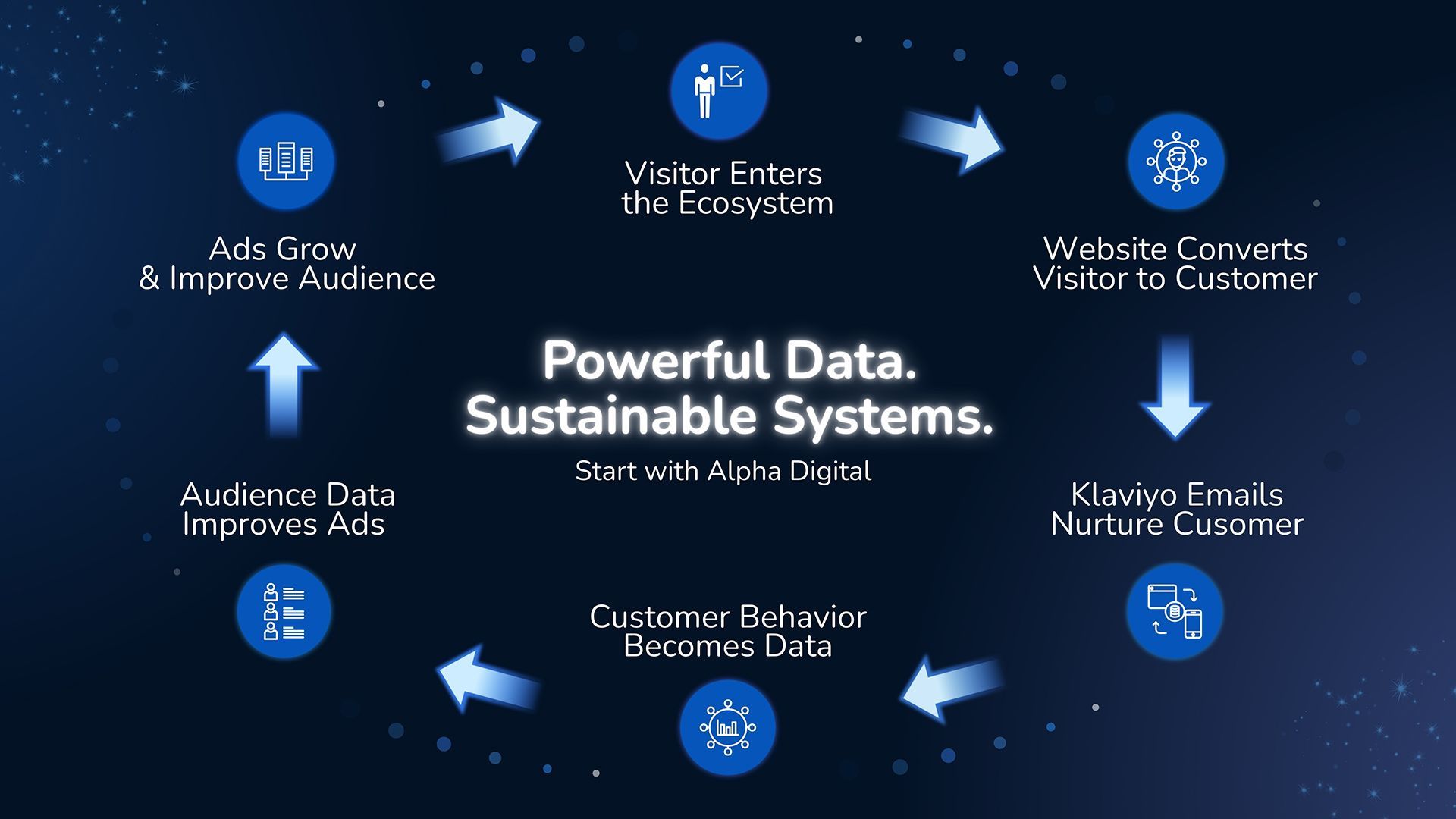
- The Digital Ecosystem = how it all connects
Most brands try to build this themselves and drown in complexity.
We build it
for you, manage it continuously, and ensure Shopify remains your core profit center.
7. Ready to Expand Your Shopify Brand Into Amazon, Walmart, or Google Merchant — Without Losing Control?
If you're considering marketplaces but want to avoid the pitfalls, we can help you:
- Decide IF it’s the right time
- Build the omnichannel strategy
- Set up your feeds and listings
- Improve marketplace performance
- Protect your Shopify margins
- Integrate everything into your Digital Ecosystem
Book a Strategy Call
Let’s review your current setup and map out your omnichannel plan.
Let's Talk
Contact Us